Homee-LeavePolicies & Entitlements
Leave policy and entitlement configuration

Translate detailed leave policy into controlled system rules.

Define who receives each leave type, how much they receive, when it becomes available and what conditions must be met before an application can proceed.

Included in the HRM.my e-Leave module
Different rules for different groupsGive permanent, contract, intern or other employee types the correct policy.
Controlled accrualChoose how and when entitlement becomes available.
Policy enforcementTurn handbook conditions into application settings.
Detailed capabilities

The settings behind each employee’s leave balance.

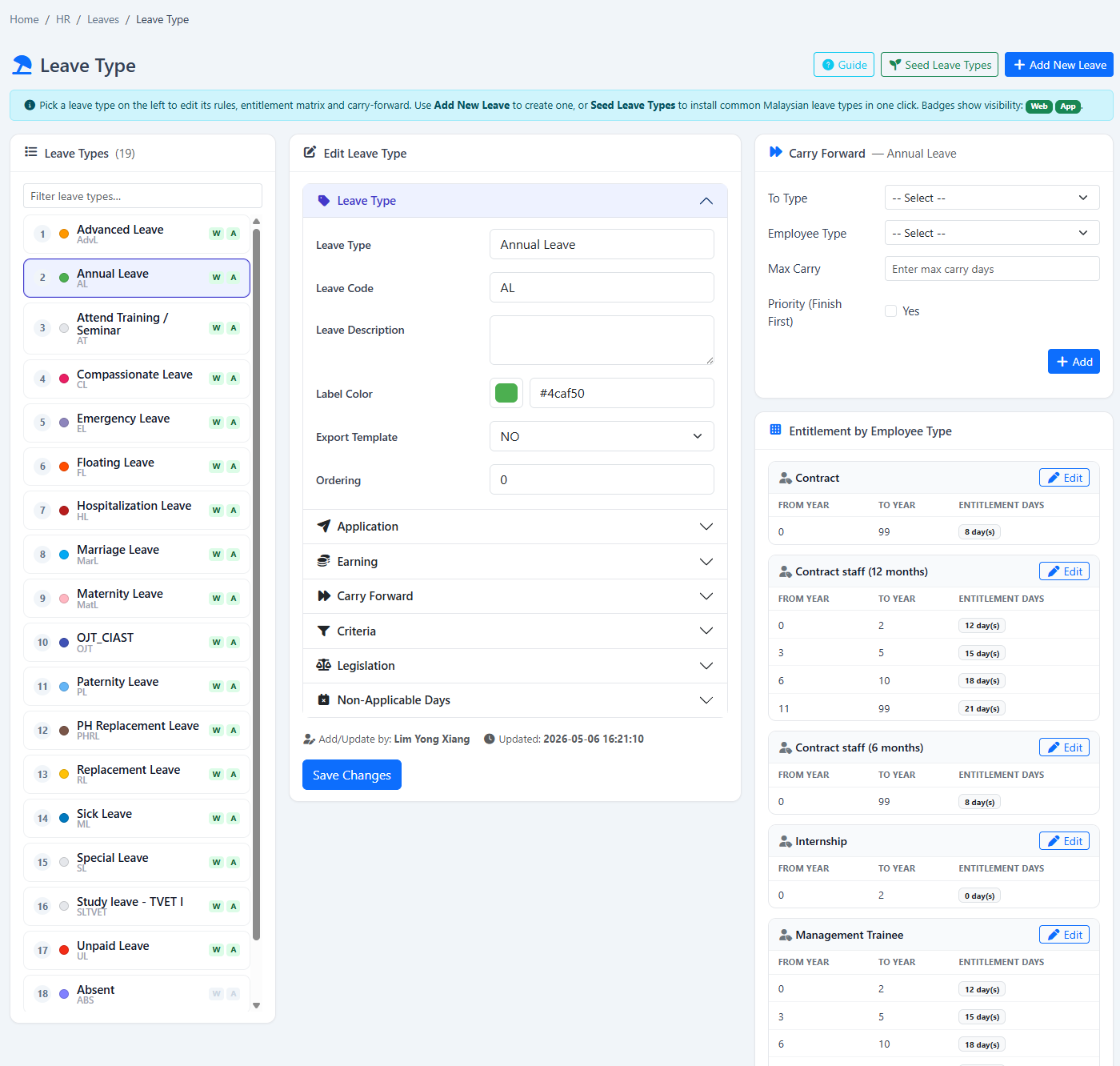
A leave type combines its own behaviour with an entitlement matrix that determines the days available to each employee type and tenure band.

Leave types and codes

Create distinct leave types with names, codes, descriptions, colours and display order.

Employee-type entitlement matrix

Set entitlement days separately for each employee type.

Years-of-service bands

Increase or change entitlement through configured from-year and to-year bands.

Earning methods

Release entitlement yearly, monthly, weekly or through another supported configuration.

Load when employee registers

Load the configured entitlement when an employee is registered instead of waiting for accrual.

Application timing

Control how far before or after a leave date the employee may apply.

Parent leave type

Link a leave type to a parent pool and optionally require the parent to have balance.

Employee eligibility

Configure employee self-application, supervisor application, gender, marital or other supported conditions.

Application requirements

Require an attachment, relief personnel or emergency contact for selected leave types.

Limits and negative balance

Configure maximum application values and whether a leave type may go below zero.

Web and app visibility

Decide whether each leave type is available through the website or supported app workflow.

Payroll treatment settings

Record paid or deduction-related treatment and supported statutory indicators for the leave type.

Inside HRM.my e-Leave

See the feature in the software.

The screenshots below show the actual e-Leave screens associated with this workflow.
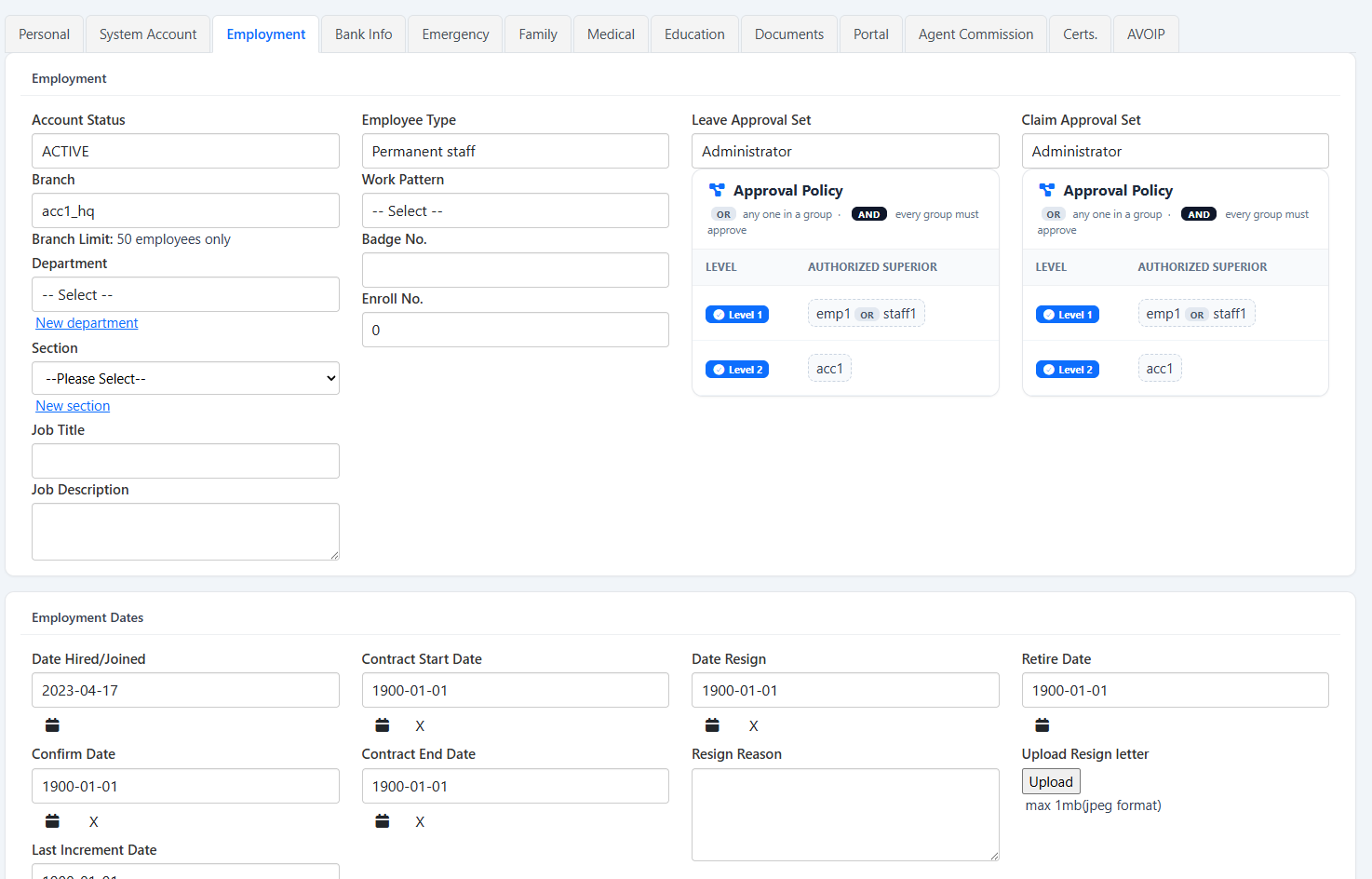
HRM.my employee-type leave entitlement and dates configuration
Employee-type entitlementConnect employee types to leave entitlement and employment conditions used when employees are registered.
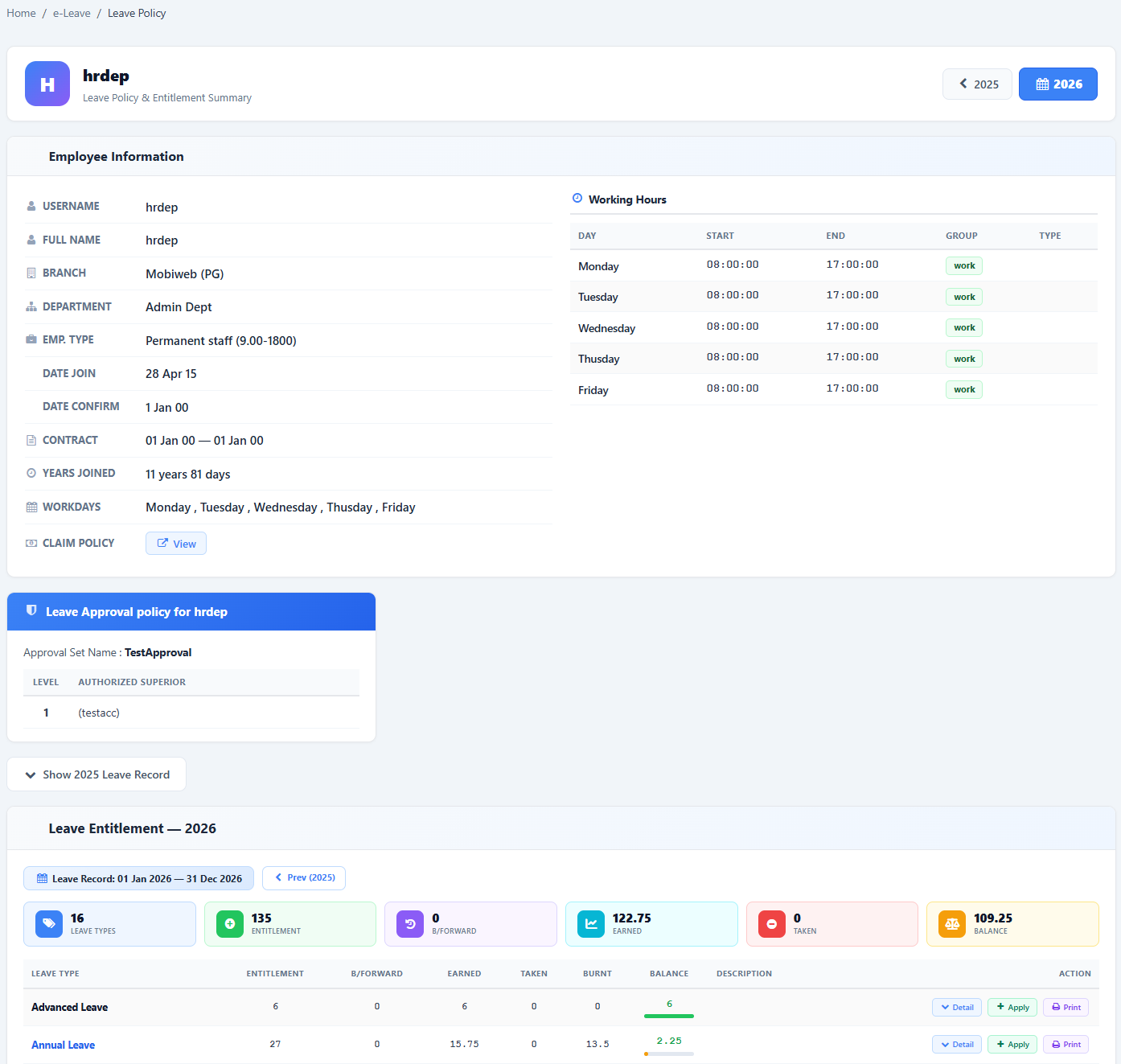
HRM.my employee leave policy view
Employee policy viewMake relevant leave-policy information available to employees through self-service.
Important configuration details

Model the policy carefully before employees begin applying.

Eligibility, entitlement and payroll treatment can affect employee balances and downstream work, so the configuration should match approved company policy.

Yearly versus monthly entitlementYearly can release the full amount up front; monthly can release entitlement progressively for pro-rated policies.
Tenure changes entitlementThe employee-type matrix can grant different day values as years of service increase.
Company policy remains the source of truthSettings should be checked against the company handbook and current legal requirements before use.
Typical workflow

Configure policy from the leave type outward.

Start with the leave behaviour, then define how different employee groups receive and use it.

  1. 1
    Create the leave typeSet its basic identity, application rules, eligibility and visibility.
  2. 2
    Choose the earning behaviourDecide when entitlement is released and whether it loads at registration.
  3. 3
    Build entitlement matricesSet days by employee type and years-of-service band.
  4. 4
    Test with representative employeesConfirm balances and application behaviour for different employee groups before rollout.
Available in the e-Leave module

Configure leave entitlement around your actual employee groups.

Show us your current leave policy and we’ll demonstrate how it can be configured in HRM.my.

Request a demonstration View module pricing